
Papaya Seed Benefits: 15 Reasons to Add Them to Your Wellness Routine
Article Outline
- H1: Papaya Seed Benefits: 15 Reasons to Add Them to Your Wellness Routine
- H2: What Are Papaya Seeds?
- H3: What Makes Papaya Seeds Nutritionally Interesting?
- H2: Papaya Seed Benefits at a Glance
- H2: 15 Potential Papaya Seed Benefits
- H3: 1. Supports Antioxidant Protection
- H3: 2. May Support Digestive Wellness
- H3: 3. Provides Beneficial Plant Compounds
- H3: 4. May Support a Healthy Gut Environment
- H3: 5. Supports Everyday Metabolic Wellness
- H3: 6. May Help the Body Manage Oxidative Stress
- H3: 7. Contributes Plant-Based Nutritional Variety
- H3: 8. May Support Natural Defenses
- H3: 9. Supports General Wellness and Vitality
- H3: 10. May Offer Antimicrobial Potential
- H3: 11. Provides Naturally Occurring Healthy Fats
- H3: 12. May Support Cardiovascular Wellness
- H3: 13. Helps Reduce Food Waste
- H3: 14. Offers a Convenient Alternative to Fresh Seeds
- H3: 15. Fits Easily Into a Natural Wellness Routine
- H2: How to Add Papaya Seeds to Your Routine
- H2: Papaya Seeds vs. Papaya Fruit
- H2: Behalal Organics Papaya Seed Capsules
- H2: Safety, Moderation and What to Know
- H2: Conclusion
- H2: Frequently Asked Questions
- H2: What Are Papaya Seeds?
What Are Papaya Seeds?
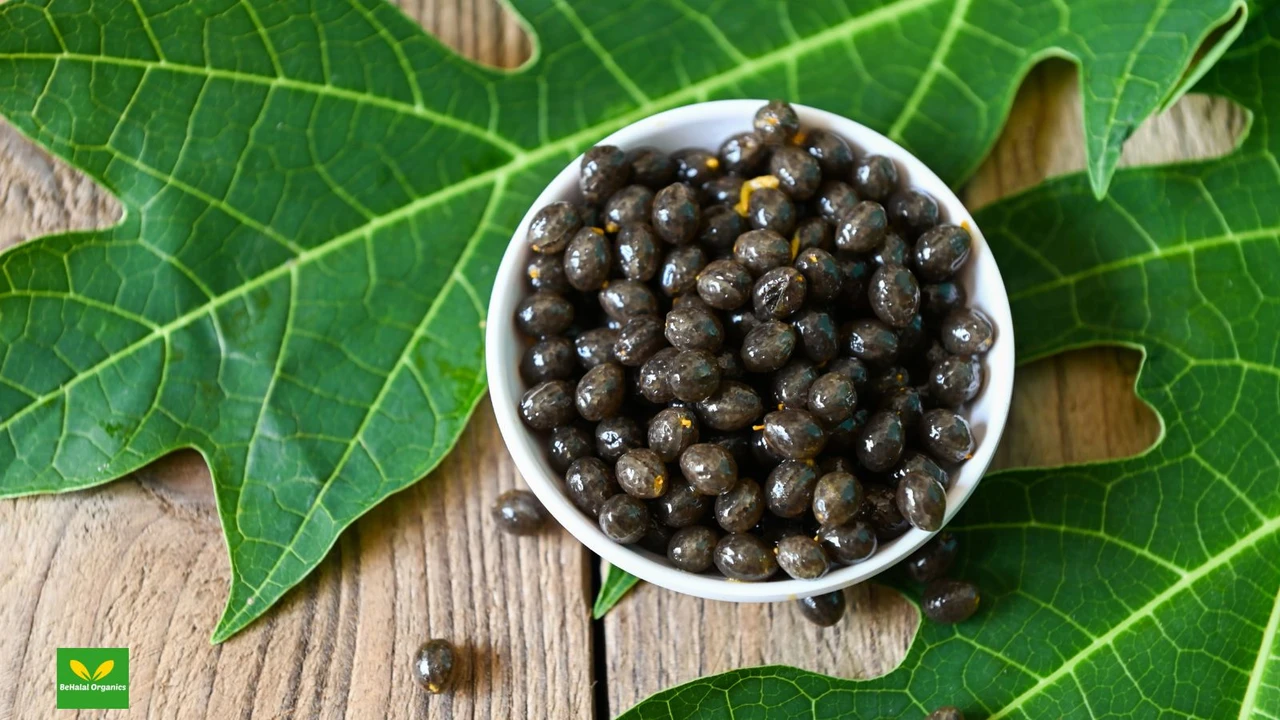
When you eat a ripe papaya, the sweet orange flesh usually gets all the attention. The small black seeds sitting in the center are often scooped out, discarded and forgotten. Yet those peppery little seeds are an interesting part of the Carica papaya plant and contain a variety of naturally occurring plant compounds that researchers continue to investigate. Papaya seeds are edible and have traditionally been used in different cultures as a food ingredient and botanical wellness option, with their sharp, pepper-like flavor making them quite different from the sweet fruit surrounding them. Research has identified compounds including phenolics, flavonoids, tannins, alkaloids, saponins and other phytochemicals in papaya seed extracts.
What makes papaya seeds particularly interesting is that they are not simply miniature versions of the fruit. Their chemical composition is distinct, which means they bring a different collection of compounds to the table. Scientific research has explored papaya seeds for antioxidant activity, antimicrobial potential and other biological properties, although much of the evidence remains laboratory- or animal-based rather than based on large human clinical trials. A 2025 study examining papaya by-products found that papaya seeds demonstrated notable phenolic content and antioxidant activity, reinforcing interest in these often-overlooked parts of the fruit. That does not mean papaya seeds should be viewed as a cure or treatment for disease; rather, they are best considered one interesting plant-based ingredient that can complement an overall nutritious lifestyle.
What Makes Papaya Seeds Nutritionally Interesting?
The appeal of papaya seeds comes largely from their bioactive compounds rather than from one magical nutrient. Researchers have identified phenolic compounds, flavonoids and other phytochemicals in different papaya seed extracts, and these compounds are associated with antioxidant activity in experimental models. Some research has also identified fatty acids and tocopherols in papaya seed material and seed oil, showing that the seeds have a more complex nutritional profile than their tiny size suggests. A recent review reported that papaya seeds contain compounds such as phenolics, tocopherols, carotenoids, glucosinolates and isothiocyanates, although the amounts can vary depending on the variety and processing method.
That variation matters. A whole seed, a dried seed, a powdered seed and an extracted compound are not necessarily nutritionally identical. The solvent used during extraction, the maturity of the fruit, processing conditions and the particular papaya variety can all influence what compounds are present and how concentrated they become. This is why it is better to talk about potential papaya seed benefits rather than promising guaranteed health outcomes. Think of papaya seeds as one piece of a much larger wellness puzzle: useful and intriguing, but most effective when paired with nutritious food, adequate hydration, movement, sleep and other healthy habits.
Papaya Seed Benefits at a Glance
Papaya seeds have attracted attention because of their combination of plant compounds, antioxidant potential, fatty acids and traditional uses. Laboratory studies have demonstrated antioxidant activity in several types of papaya seed extracts. One study found that papaya seed extracts could scavenge several types of free radicals, with activity associated in part with their phenolic and flavonoid content. Another investigation using a water extract found protective antioxidant activity in cultured human skin fibroblast cells exposed to oxidative stress.
At the same time, it is important to keep the evidence in perspective. Finding antioxidant activity in a test tube or cell culture does not automatically mean that consuming papaya seeds will produce the same effect in the human body. Absorption, metabolism, dosage and individual differences all matter. Some studies have also investigated papaya seed extracts in animals, including research examining metabolic pathways, but those findings should not be presented as proof that papaya seeds treat diabetes, parasites, infections or other diseases in humans.
With that distinction in mind, here are 15 reasons papaya seeds may deserve a place in a thoughtful wellness routine.
15 Potential Papaya Seed Benefits
1. Supports Antioxidant Protection
One of the most researched features of papaya seeds is their antioxidant potential. Antioxidants are compounds that can help neutralize reactive molecules in experimental systems, and plant foods are important sources of many antioxidant compounds. Studies of papaya seed extracts have detected phenolic compounds and flavonoids and have demonstrated free-radical-scavenging activity using laboratory tests such as DPPH and ABTS assays. A separate study found that papaya seed water extract showed antioxidant activity in cultured human skin cells exposed to hydrogen peroxide-induced oxidative stress.
Why does that matter for everyday wellness? Your body naturally produces reactive molecules as part of normal metabolism, while environmental factors can also influence oxidative balance. A diet containing a wide variety of plant foods provides numerous compounds that participate in the body's antioxidant network. Papaya seeds can contribute to that plant diversity, but they should not be viewed as a replacement for fruits, vegetables or other nutrient-rich foods. Instead, their naturally occurring phytochemicals make them an interesting addition to a varied diet.
2. May Support Digestive Wellness
Papaya seeds have a long history of traditional use for digestive and gastrointestinal wellness. Their pungent, pepper-like taste has made them a traditional food and botanical ingredient in different cultures, and their phytochemical profile has encouraged researchers to investigate their biological properties. Behalal Organics describes its papaya seed product as a traditional wellness botanical intended to complement digestive wellness routines.
Still, digestive health is bigger than any single ingredient. Regular bowel movements, adequate fiber, enough water, physical activity and a balanced diet all work together to support the digestive system. Papaya fruit itself also contains fiber and the enzyme papain, but papaya seeds should not automatically be credited with the same properties or effects. If you enjoy papaya seeds, think of them as a small botanical component of your overall nutrition strategy rather than a quick fix for digestive problems.
3. Provides Beneficial Plant Compounds
Papaya seeds contain a surprisingly diverse collection of phytochemicals. Research has identified compounds from several groups, including phenols, flavonoids, alkaloids, tannins, saponins, terpenoids and glycosides. A 2023 study examining ethanolic papaya seed extract confirmed multiple phytochemical classes and found measurable antioxidant activity in laboratory testing.
This diversity is one reason researchers continue to study papaya seeds. Plants do not rely on one compound alone; instead, they produce complex mixtures of chemicals that may interact in different ways. That is also why whole-food nutrition can be so fascinating. Rather than chasing a single isolated nutrient, incorporating a variety of plant foods allows you to encounter different naturally occurring compounds. Papaya seeds offer another way to broaden that variety, particularly for people who enjoy exploring traditional foods and botanical ingredients.
4. May Support a Healthy Gut Environment
A healthy gut is influenced by much more than digestion alone. The foods you eat, the amount of dietary fiber in your diet, hydration, physical activity and the overall diversity of your meals all contribute to gastrointestinal wellness. Papaya seeds have traditionally been associated with digestive and cleansing practices, and researchers have investigated their antimicrobial and other biological properties. However, laboratory findings should not be interpreted as proof that eating papaya seeds will alter the human gut microbiome in a specific or predictable way.
The more practical approach is to use papaya seeds as part of a broader dietary pattern. If you already eat plenty of vegetables, fruits, legumes, whole grains, nuts and seeds, adding a small amount of papaya seed may simply increase the variety of plant compounds in your diet. Wellness does not need to be complicated. Sometimes the strongest routine is the one you can follow consistently without turning every meal into a science experiment.
5. Supports Everyday Metabolic Wellness
Researchers have investigated papaya seed extracts for their possible effects on enzymes involved in carbohydrate metabolism. One experimental study found that certain papaya seed extracts inhibited α-amylase and α-glucosidase in laboratory testing and also produced effects on post-meal glucose levels in diabetic rats.
Those results are interesting, but they do not establish that papaya seeds can control blood sugar in people. Animal studies and enzyme assays are early-stage evidence, and human metabolism is considerably more complicated. If you are managing blood glucose or taking medication, papaya seeds should never be used as a substitute for medical care or prescribed treatment. For general wellness, however, their phytochemical profile makes them an intriguing plant ingredient worth continued research.
6. May Help the Body Manage Oxidative Stress
Oxidative stress occurs when reactive molecules and antioxidant defenses become imbalanced. It is a normal area of scientific research because oxidative processes are involved in many biological pathways. Papaya seed extracts have demonstrated free-radical-scavenging activity in several laboratory models, including research involving phenolic-rich fractions.
The important distinction is between antioxidant activity in a laboratory test and a proven clinical benefit in humans. Those two ideas are not interchangeable. Nevertheless, the presence of antioxidant phytochemicals gives papaya seeds a legitimate reason to remain on the research radar. From a lifestyle perspective, the broader lesson is even more useful: build your diet around a colorful range of whole plant foods instead of relying on one supplement to do all the work.
7. Contributes Plant-Based Nutritional Variety
Variety is one of the easiest ways to make a healthy diet more interesting. Papaya seeds provide a different flavor, texture and collection of plant compounds compared with the fruit itself. Reviews of papaya seeds have described them as containing protein, fat and other nutritional components, while research has also identified several bioactive compounds.
For someone who already enjoys natural ingredients, this makes papaya seeds particularly appealing. You are not necessarily adding them because you expect one dramatic overnight transformation. You are adding another plant-based ingredient to an already balanced routine. That mindset is healthier and more sustainable because it focuses on overall nutritional quality rather than miracle claims.
8. May Support Natural Defenses
Papaya seeds have been investigated for antimicrobial activity, and experimental studies have identified several compounds that may contribute to biological effects. Reviews of papaya seed research have discussed antimicrobial, antiparasitic, antioxidant and immunomodulatory potential, particularly in preclinical settings.
This is an area where careful wording matters. Research into antimicrobial properties does not mean papaya seeds can replace antibiotics or treat infections. If you have symptoms of an infection, professional medical evaluation is important. What the research does tell us is that papaya seeds contain biologically active compounds worthy of further study. For everyday wellness, they can be viewed as one botanical ingredient among many rather than as a medicinal treatment.
9. Supports General Wellness and Vitality
Sometimes the most useful wellness ingredients are those that fit naturally into a consistent routine. Papaya seeds can be used as a food ingredient or incorporated into a convenient supplement format, giving people another way to explore the nutritional properties of the papaya plant. Their naturally occurring phytochemicals and fatty components make them an interesting option for people who prefer plant-based wellness products.
There is no single capsule or seed that can manufacture energy, vitality or health by itself. Your daily energy is influenced by sleep, nutrition, hydration, activity, stress and many other factors. Papaya seeds can complement those habits, but they work best when you think of wellness as a complete picture rather than a search for one perfect ingredient.
10. May Offer Antimicrobial Potential
Another interesting area of papaya seed research is antimicrobial activity. Experimental studies have found that different papaya seed extracts can inhibit certain microorganisms under laboratory conditions. Research on papaya by-products has also reported antibacterial activity in seed extracts, with results varying according to papaya variety and extraction method.
This potential helps explain why papaya seeds have attracted attention in traditional wellness practices. However, antimicrobial activity in a laboratory environment does not automatically translate into a safe or effective antimicrobial treatment for humans. More research is needed to understand appropriate doses, mechanisms and clinical relevance. For consumers, the takeaway is simple: appreciate the science without turning preliminary evidence into medical promises.
11. Provides Naturally Occurring Healthy Fats
Papaya seeds are not completely dry, inert particles. They contain oils with several fatty acids, and research on papaya seed oil has identified oleic, palmitic, linoleic and stearic acids among its components. A recent review also discussed tocopherols and other compounds found in papaya seeds and seed oil.
Fats are essential components of a balanced diet, although the type and overall quantity matter. Papaya seeds are unlikely to be a major source of dietary fat when consumed in the small amounts typical of a supplement or food garnish, but their lipid profile adds another dimension to their nutritional composition. It is another reminder that these tiny seeds are chemically more complex than their appearance suggests.
12. May Support Cardiovascular Wellness
Because papaya seeds contain antioxidant compounds and various fatty acids, researchers have shown interest in their possible cardiovascular relevance. Recent scientific reviews have discussed the bioactive components of papaya seeds, including phenolics, tocopherols, carotenoids and seed-oil fatty acids.
But it would be premature to say that eating papaya seeds prevents heart disease or lowers cholesterol in humans. Cardiovascular health depends on many established factors, including blood pressure, cholesterol levels, physical activity, smoking status, diet and genetics. Papaya seeds can be part of a plant-rich lifestyle, but they should not replace proven cardiovascular strategies or prescribed treatment.
13. Helps Reduce Food Waste
Here is a benefit that has nothing to do with taking a supplement: papaya seeds are part of the fruit that is often thrown away. Researchers have increasingly explored fruit by-products as sources of useful nutrients and bioactive compounds instead of treating them purely as waste. Papaya seeds are a particularly interesting example because studies have found antioxidant and antimicrobial potential in their extracts.
Using more of a food can be a simple sustainability habit. Instead of thinking only about the sweet flesh, you can recognize that different parts of plants may have different culinary or nutritional uses. Not every food by-product needs to become a supplement, of course, but finding practical ways to reduce unnecessary food waste is a positive habit in its own right.
14. Offers a Convenient Alternative to Fresh Seeds
Fresh papaya is delicious, but not everyone has access to ripe fruit every day. Even when it is available, scooping, cleaning and storing fresh seeds can be inconvenient. A properly prepared papaya seed supplement offers a more straightforward option for people who want to incorporate papaya seed into a consistent routine without dealing with the fresh fruit.
Behalal Organics currently lists Papaya Seed Vegan Capsules 500mg – 100 Count, made with 100% pure papaya seed and vegetarian capsules. The product page states that it contains no binders, fillers, additives or dyes and lists a suggested use of 2–3 capsules daily, preferably with meals, or as directed by a healthcare provider.
15. Fits Easily Into a Natural Wellness Routine
The final benefit may be the simplest: papaya seeds can be convenient. A wellness routine is more likely to last when it fits into your real life rather than demanding an elaborate schedule. Whether someone chooses whole papaya seeds as a food ingredient or a convenient capsule format, the goal should be consistency, moderation and a balanced approach.
Behalal Organics offers a 500 mg Papaya Seed capsule option designed around this kind of convenience. Its product information describes the capsules as vegetarian and made from pure papaya seed powder without unnecessary fillers or dyes. If you are interested in trying papaya seed as part of your wellness routine, always read the product directions and consider your personal health circumstances before adding a new supplement.
How to Add Papaya Seeds to Your Routine
If you are using fresh papaya seeds, their strong peppery flavor can take some getting used to. Some people use small amounts as a seasoning, while others dry and grind them before adding them to foods. Because the flavor is quite pronounced, starting with a modest amount makes sense. The key is not to assume that consuming more automatically means receiving more benefits.
If convenience is your priority, capsules can make the routine much easier. Behalal Organics currently offers its Papaya Seed Vegan Capsules 500mg, with 100 capsules per bottle. The manufacturer's listed suggested use is 2–3 capsules daily, preferably with meals, or according to the advice of a healthcare professional.
A simple routine might look like this:
- Choose a quality papaya seed product from a reputable source.
- Follow the manufacturer's serving instructions rather than improvising a high dose.
- Take the capsules with food if that is the product's recommended use.
- Keep your overall diet varied and nutrient-rich.
- Pay attention to how your body responds.
The goal is to make papaya seed one small part of your wellness routine—not the foundation of it.
Papaya Seeds vs. Papaya Fruit
Papaya fruit and papaya seeds come from the same plant, but they offer different nutritional characteristics. The orange flesh is naturally sweet and provides nutrients such as vitamin C, carotenoids and dietary fiber, while the seeds have a pungent flavor and contain different phytochemicals and fatty components. Research on papaya seeds has focused heavily on their antioxidant and other bioactive properties, while the fruit is much more commonly consumed as a food.
| Feature | Papaya Fruit | Papaya Seeds |
|---|---|---|
| Flavor | Sweet and tropical | Peppery and pungent |
| Common use | Fresh fruit, smoothies, salads | Seasoning, traditional preparations, supplements |
| Notable components | Vitamin C, carotenoids, fiber | Phenolics, flavonoids, other phytochemicals and fatty compounds |
| Research interest | Nutrition and digestive properties | Antioxidant, antimicrobial and other bioactive potential |
| Convenience | Requires fresh fruit | Can be used in powdered/capsule form |
You do not have to choose one over the other. In fact, they can complement each other beautifully. Enjoying papaya as a whole food while using papaya seed in moderation gives you different components of the plant. The broader nutritional principle is to embrace diversity rather than searching for a single superfood.
Behalal Organics Papaya Seed Capsules
If you are looking for a convenient way to incorporate papaya seed into your routine, Behalal Organics currently offers Papaya Seed Vegan Capsules 500mg in a 100-count bottle. The product is described as containing 100% pure papaya seed, with vegetarian capsules and no binders, fillers, additives or dyes. The listed price on the current product page is $24.95, although prices and availability can change.
Shop Papaya Seed Vegan Capsules at Behalal Organics
The product page recommends taking 2–3 capsules daily, preferably with meals, or as directed by a healthcare provider. It also advises people who are pregnant, nursing, taking medication or managing a medical condition to consult a healthcare professional before use.
Choosing a supplement should always involve looking beyond the marketing label. Check the ingredients, serving instructions, capsule type and manufacturer's information. A clean-label product can be convenient, but quality, appropriate use and personal suitability matter just as much as the ingredient itself.
Safety, Moderation and What to Know
Papaya seeds are edible, but natural does not automatically mean risk-free. Scientific research on papaya seeds is promising in some areas, but much of the evidence comes from laboratory and animal studies. Even a 2023 study that found antioxidant activity and no observed acute toxicity at the tested dose in rats specifically recommended further subchronic and chronic toxicity research before definitive conclusions about safety could be made.
That is why moderation and professional guidance are important. If you are pregnant or breastfeeding, taking prescription medication, have a medical condition, or are considering a concentrated supplement rather than normal food amounts, speak with a qualified healthcare professional first. Do not use papaya seeds as a replacement for treatment prescribed for a medical condition.
It is also useful to distinguish between traditional use, laboratory evidence and clinical evidence. Traditional use can provide valuable clues for researchers, while laboratory studies can identify biological activity. But controlled human trials are needed before strong health claims can be made. Keeping that distinction clear helps you enjoy natural products without falling into the trap of exaggerated wellness promises.
Conclusion
Papaya seeds may be small, but they have generated considerable scientific and traditional interest. Their phenolics, flavonoids, antioxidants, fatty compounds and other phytochemicals make them a fascinating part of the papaya plant, while research has explored their antioxidant, antimicrobial and metabolic potential.
The biggest takeaway is not that papaya seeds are a miracle ingredient. It is that an often-discarded part of a familiar tropical fruit contains a surprisingly complex collection of natural compounds. Adding papaya seed to a wellness routine can be one small way to increase plant-based variety, especially when used alongside a balanced diet and healthy lifestyle.
For those who prefer convenience, Behalal Organics Papaya Seed Vegan Capsules 500mg provide a straightforward way to incorporate pure papaya seed powder into a daily routine.
Explore Papaya Seed Capsules from Behalal Organics
Frequently Asked Questions
1. Are papaya seeds edible?
Yes. Papaya seeds are edible and have traditionally been consumed in various ways. They have a strong, peppery flavor and contain a range of naturally occurring plant compounds. As with any food or supplement, moderation is sensible, and concentrated forms should be used according to product directions.
2. What are the main papaya seed benefits?
Research has explored several potential properties of papaya seeds, particularly their antioxidant and antimicrobial potential. They also contain various phytochemicals, fatty acids and other plant compounds. However, many studies have been conducted in laboratories or animals, so more human research is needed before definitive health claims can be made.
3. Can I take papaya seed capsules every day?
Behalal Organics lists a suggested use of 2–3 500mg capsules daily, preferably with meals, or as directed by a healthcare provider. If you are pregnant, breastfeeding, taking medication or managing a medical condition, consult a healthcare professional before using a papaya seed supplement.
4. Where can I buy papaya seed capsules?
Papaya seed capsules are available from Behalal Organics. Its current product listing features 500mg vegetarian papaya seed capsules in a 100-count bottle.
5. Are papaya seeds the same as papaya fruit?
No. Although both come from Carica papaya, their nutritional and phytochemical profiles differ. Papaya fruit is sweet and commonly eaten as a food, while the seeds have a pungent flavor and contain their own collection of plant compounds. Both can have a place in a varied, balanced approach to nutrition.
DISCLAIMER
This blog has not been approved by your local health department and is not intended to provide diagnosis, treatment, or medical advice. The content provided on this blog is for informational purposes only. Please consult with a physician or other healthcare professional regarding any medical or health-related diagnosis or treatment options. Information on this blog should not be considered as a substitute for advice from a healthcare professional. The claims made about specific products throughout this blog are not approved to diagnose, treat, cure, or prevent disease.
Explore Popular Articles
-
What to Know About Herbal Digestive Support with Turmeric and Botanicals
21st Oct 2026Article Outline - H1: What to Know About Herbal Digestive Support with Turmeric and Botanicals H
-
What Are Kola Nut Bitters With Garlic, Ginger, and Moringa?
20th Oct 2026Article Outline - H1: What Are Kola Nut Bitters With Garlic, Ginger, and Moringa? H2: Understand
-
What Is Mondia Whitei Powder? Uses, Traditional Benefits, and Preparation
15th Oct 2026Mondia Whitei powder is a plant-based product made from the dried and ground parts of Mondi