
Irish Sea Moss Powder: Nutrition Facts, Minerals, and Uses
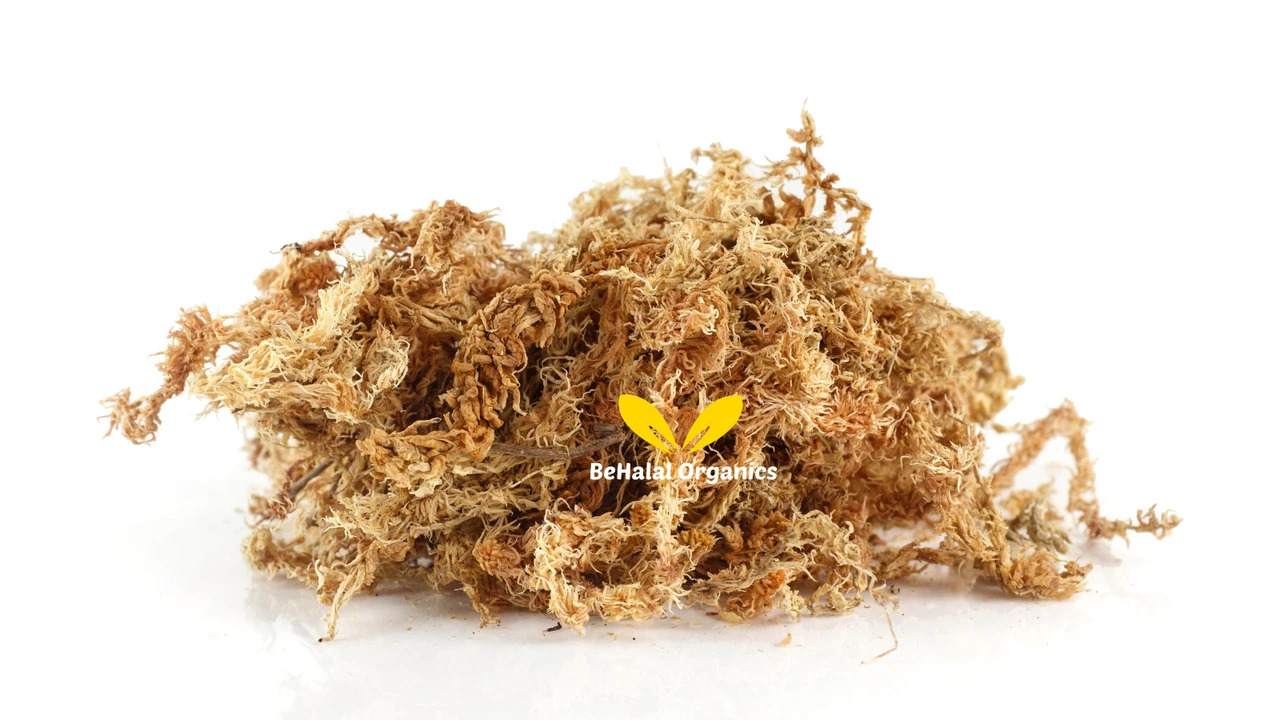
Sea moss has become one of those marine foods that seems to show up everywhere—from smoothie recipes and wellness conversations to ingredient lists and natural food stores. But when you look beyond the trend, there is a much bigger story underneath the surface. Irish sea moss powder is made from dried red seaweed that is ground into a fine powder, making it easier to add to foods and drinks without preparing fresh seaweed every time. One species that deserves particular attention is Chondracanthus chamissoi, a red marine alga studied for its dietary fiber, protein, mineral content, polyphenols, and functional properties.
There is an important naming point to understand before diving into the nutrition facts. Traditional Irish moss generally refers to Chondrus crispus, whereas Chondracanthus chamissoi is a different species of red seaweed found along the Pacific coast of South America. Both belong to the broader red-seaweed group, but they are not the same species. This distinction matters because the nutritional composition of seaweed can vary considerably according to species, growing location, harvesting conditions, processing, and even the water in which it grows. Research published in 2024 found that dried C. chamissoi contained substantial dietary fiber, protein, and ash, while also demonstrating useful water- and oil-holding properties.
So, what exactly does Irish sea moss powder contain? What minerals can it provide? How can you use it in everyday recipes? And what should you know before making it part of your routine? Let's take a closer look.
1. What Is Irish Sea Moss Powder?
Irish sea moss powder is essentially dried seaweed that has been processed into a powder. The powder format is popular because it is convenient: instead of soaking, washing, blending, or preparing fresh seaweed, you can simply incorporate a small amount into a recipe. Depending on the product, the seaweed may be sold under names such as sea moss powder, Irish moss powder, red seaweed powder, or a species-specific name such as Chondracanthus chamissoi.
C. chamissoi is a marine red alga distributed along parts of the Pacific coast of South America, including Peru and Chile. Scientific research has examined the species as an edible seaweed and as a source of polysaccharides used in food-related applications. Its cell walls contain carrageenan-type polysaccharides, which help explain why red seaweeds can have interesting thickening, gelling, and water-binding characteristics.
The powder itself is not a magic ingredient. Think of it more like a concentrated plant-based food ingredient from the ocean. Because the water has been removed during drying, the nutrients and minerals present in the original seaweed become part of a much smaller serving of dried material. That is one reason seaweed powders can be useful in cooking, but it is also why portion size and product quality matter.
2. Is Chondracanthus chamissoi the Same as Irish Moss?
No. This is one of the most important points to clarify when discussing sea moss products.
Traditional Irish moss is commonly associated with Chondrus crispus, while Chondracanthus chamissoi is another species of red seaweed. They share some characteristics because they belong to the same broad group of marine red algae, but they have different scientific identities and can have different nutritional profiles.
Why does that matter to shoppers? Imagine two fruits that are both berries. Calling both "berries" is useful as a broad description, but it does not mean they have identical nutritional values, flavors, or growing conditions. The same principle applies to seaweeds. Research on C. chamissoi specifically has found meaningful amounts of protein, dietary fiber, ash, and polyphenolic compounds in dried samples.
If a product label specifically identifies Chondracanthus chamissoi, it is better to describe the product accurately rather than automatically treating it as identical to Chondrus crispus. This distinction also helps consumers understand why nutritional values printed on one sea moss product may not match another.
3. Irish Sea Moss Powder Nutrition Facts
The nutritional composition of sea moss powder can vary substantially, so there is no single nutrition panel that accurately represents every product. Species, location, cultivation or harvesting practices, washing, drying temperature, and other processing steps can all influence the final composition.
A 2024 study examining Chondracanthus chamissoi from the Peruvian coast provides useful species-specific data. The control dried seaweed sample contained approximately 20.2 grams of protein per 100 grams of dry weight, 56.6 grams of total dietary fiber per 100 grams dry weight, and 20.0 grams of ash per 100 grams dry weight. The researchers also measured polyphenols and antioxidant capacity.
| Nutritional component | Reported in one C. chamissoi study |
|---|---|
| Protein | 20.2 g/100 g dry weight |
| Total dietary fiber | 56.6 g/100 g dry weight |
| Ash | 20.0 g/100 g dry weight |
| Total polyphenols | 1.6 mg GAE/g |
| Antioxidant capacity | 2.4 mM Trolox mg/g |
These numbers should not be treated as the guaranteed nutrition facts for every sea moss powder. They represent a particular research sample under particular conditions. In fact, other research on Chilean seaweeds has demonstrated substantial variation in mineral and chemical composition between species.
The practical takeaway is simple: if you want the exact calories, minerals, iodine, protein, or other nutrients in a particular product, check that product's nutrition label or laboratory testing rather than relying on a generic sea moss nutrition chart.
4. Dietary Fiber in Chondracanthus chamissoi
One of the most interesting nutritional characteristics of Chondracanthus chamissoi is its dietary fiber content. In the 2024 Peruvian study, the dried control sample contained 56.6 g of total dietary fiber per 100 g dry weight. That is a considerable proportion of the dried material.
Dietary fiber is not digested in exactly the same way as many simple carbohydrates. Different types of fiber behave differently in the digestive system, and marine algae contain distinctive polysaccharides that are not identical to the fibers found in common land plants.
This helps explain why seaweed can behave differently when incorporated into food. Researchers studying C. chamissoi reported a water-holding capacity of about 17.6 g/g and a swelling capacity of approximately 9.8 mL/g in the control dried sample. Those properties are particularly interesting from a food-technology perspective because they show how the seaweed's structure interacts with water.
For everyday use, however, it is better to think of sea moss powder as one possible source of marine dietary fiber rather than assuming that adding a tiny amount to a smoothie automatically supplies a large amount of fiber. The actual contribution depends on the serving size.
5. Protein Content
Sea moss is not normally thought of as a major protein food, but Chondracanthus chamissoi has demonstrated a noteworthy protein concentration when analyzed on a dry-weight basis.
The 2024 study reported approximately 20.2 g of protein per 100 g dry weight in its control sample. This is useful information, but there is an important practical distinction between laboratory composition and everyday serving size. People typically consume much less than 100 grams of seaweed powder at once, meaning the amount of protein in an ordinary serving will be much smaller.
Seaweed therefore should not automatically be viewed as a replacement for conventional protein-rich foods such as beans, lentils, eggs, fish, dairy products, or other protein sources. Instead, its protein is one part of a broader nutritional profile that also includes fiber, minerals, carbohydrates, and marine polysaccharides.
The exact protein level can also change according to species and analytical method. That is another reason product-specific information is more useful than assuming every sea moss powder has the same composition.
6. Minerals Found in Sea Moss Powder
When people talk about sea moss, minerals are often one of the first things mentioned. Seaweed can absorb minerals from seawater and accumulate various inorganic elements within its tissues. Research into Chilean seaweeds, including Chondracanthus chamissoi, has specifically examined minerals such as sodium, potassium, calcium, magnesium, phosphorus, iron, manganese, copper, zinc, molybdenum, and selenium.
However, "contains minerals" does not mean that every sea moss powder contains the same amount of every mineral. Seaweed mineral composition can vary significantly depending on species, geographical location, season, water chemistry, processing, and other environmental factors.
| Mineral | Why it matters nutritionally |
|---|---|
| Calcium | Supports normal bones, teeth, and muscle function |
| Magnesium | Involved in numerous enzymatic and physiological processes |
| Potassium | Important for fluid balance and normal muscle and nerve function |
| Iron | Needed for hemoglobin and oxygen transport |
| Zinc | Supports normal immune function and many enzymatic processes |
| Manganese | Involved in metabolism and antioxidant enzyme systems |
| Copper | Involved in iron metabolism and connective-tissue formation |
| Selenium | Supports antioxidant and thyroid-related biological functions |
| Iodine | Essential for thyroid hormone production |
The presence and amount of these minerals should be verified using product-specific laboratory analysis where possible.
7. Iodine: An Important Mineral to Understand
Iodine deserves special attention whenever seaweed is discussed. The body needs iodine to produce thyroid hormones, but more is not necessarily better. Seaweeds can contain iodine, and the concentration can vary widely depending on the species and growing environment.
The U.S. National Library of Medicine's 2026 LactMed review notes that sea moss contains iodine and other minerals, while also highlighting the potential for seaweeds to accumulate environmental contaminants such as arsenic, lead, cadmium, and mercury. The review specifically warns that excessive iodine exposure from seaweed can have consequences, including thyroid suppression in breastfed infants.
This is why responsible use matters. A person should not assume that taking larger quantities of sea moss provides greater nutritional benefits. If you regularly consume seaweed or seaweed supplements, especially in concentrated forms, it makes sense to pay attention to the iodine content shown by the manufacturer.
People with thyroid conditions, those taking thyroid-related medication, pregnant or breastfeeding individuals, and anyone with a medically advised iodine restriction should speak with a qualified healthcare professional before making concentrated seaweed products a regular part of their diet.
8. Antioxidant Compounds in Chondracanthus chamissoi
Nutrition is not limited to protein, carbohydrates, fats, vitamins, and minerals. Seaweeds also contain a variety of naturally occurring compounds that researchers continue to investigate.
The 2024 study of C. chamissoi measured total polyphenol content and antioxidant capacity. Its control dried sample had approximately 1.6 mg GAE/g of total polyphenols and an antioxidant capacity of about 2.4 mM Trolox mg/g using the study's analytical methods.
These laboratory measurements are interesting because they demonstrate that the seaweed contains compounds with antioxidant activity under experimental testing. However, a laboratory antioxidant-capacity measurement should not automatically be translated into a claim that eating sea moss prevents or treats a particular disease.
That distinction is important. Scientific research can show that a food contains bioactive compounds without proving that consuming the food produces a specific medical outcome in humans. Sea moss is best approached as a nutrient-containing food ingredient rather than a cure-all.
9. Carrageenan and Marine Polysaccharides
One of the reasons red seaweeds are so fascinating is their natural polysaccharide content. Chondracanthus chamissoi has been studied for its carrageenan structures, including κ- and ι-related carrageenan components. Researchers have characterized polysaccharides extracted from the species and found that their structure can vary according to extraction conditions.
Carrageenan is widely known in food science for its ability to interact with water and influence texture. Depending on its type and concentration, it can contribute to thickening, stabilization, or gel formation.
This helps explain why seaweed-derived ingredients have applications far beyond smoothies. They can be investigated for use in food formulations, gels, sauces, desserts, beverages, and other products where texture matters.
Still, eating seaweed powder and consuming purified carrageenan as a food additive are not necessarily the same thing. The whole seaweed contains a complex mixture of fiber, minerals, proteins, pigments, carbohydrates, and other compounds.
10. How to Use Irish Sea Moss Powder
The beauty of a powder is its simplicity. You do not need an elaborate recipe or a complicated kitchen routine. Sea moss powder can be incorporated into foods and drinks where its texture and flavor fit the recipe.
Some common ways people use sea moss powder include:
- Smoothies and shakes
- Oatmeal and overnight oats
- Soups and stews
- Homemade sauces
- Porridge
- Yogurt or plant-based yogurt
- Desserts and puddings
- Homemade energy-style drinks
- Baked recipes
A small amount can be blended into a smoothie with fruits such as banana, mango, pineapple, berries, or dates. If you are new to sea moss powder, starting with the manufacturer's suggested serving size is a more sensible approach than adding large quantities simply because the ingredient is marketed as nutrient-rich.
Because seaweed products can differ in concentration, texture, and mineral content, always follow the directions supplied with the specific product you purchased.
11. Irish Sea Moss Powder in Smoothies
Smoothies are probably one of the easiest ways to introduce sea moss powder into a daily food routine. The powder can be mixed with fruit, vegetables, plant-based milk, yogurt, oats, seeds, or nut butter depending on your preferences.
A tropical combination can be particularly appealing because naturally sweet fruits can balance the earthy marine character of seaweed. Mango, pineapple, banana, and berries are all examples of ingredients that can work well in a smoothie.
The trick is not to overwhelm the recipe. Sea moss should complement the smoothie rather than dominate it. You can think of it like adding a seasoning: the goal is to incorporate the ingredient smoothly into the overall recipe.
For a simple breakfast, blend fruit with your preferred liquid base, add oats or another filling ingredient, and incorporate the recommended amount of sea moss powder. The result can be a convenient way to add a marine-derived ingredient to a familiar meal without completely changing the way you eat.
12. Using Sea Moss Powder in Cooking
Sea moss powder can also be used beyond beverages. Because red seaweed contains water-interacting polysaccharides, powdered seaweed can influence texture when incorporated into certain recipes.
It can be mixed into soups, sauces, porridges, and other moist foods. Some people also experiment with it in homemade desserts or plant-based recipes where thickening is useful.
The key is to remember that powder is concentrated compared with fresh, water-rich seaweed. A recipe that calls for fresh seaweed cannot automatically be converted gram-for-gram into powder.
Cooking methods can also influence nutritional composition. In the 2024 C. chamissoi study, researchers found that boiling and steaming before dehydration affected the retention of protein, fat, fiber, polyphenols, and carbohydrates.
So if you are using sea moss primarily for its nutritional characteristics, preparation and processing are worth considering.
13. Sea Moss Powder and Food Texture
Have you ever noticed how some ingredients seem to disappear into a recipe while others completely change the texture? Sea moss belongs to the second category.
The polysaccharides and fiber naturally present in red seaweed can interact with water. Researchers found strong water-holding and swelling properties in C. chamissoi, which helps explain its potential as a functional food ingredient.
This characteristic can be useful when developing recipes where a thicker or more cohesive texture is desirable. It may also explain why some sea moss products become noticeably thicker when mixed with liquids.
However, texture depends on the amount used, particle size, processing method, and the rest of the recipe. Two sea moss powders can behave differently in the kitchen even if both are labeled "sea moss powder."
14. How to Choose a Quality Sea Moss Powder
Not all sea moss powders are necessarily identical. When buying one, look beyond attractive packaging and exaggerated claims.
Start with the scientific name if it is provided. If the product is made from Chondracanthus chamissoi, the label should make that clear rather than leaving consumers to guess which species they are purchasing.
Next, look for information about sourcing, processing, ingredients, and recommended serving size. A simple ingredient list can make it easier to understand what you are actually buying.
Laboratory testing is another valuable consideration. Since seaweeds can accumulate minerals as well as environmental contaminants, testing for heavy metals and other relevant contaminants can provide useful quality information. Research on Chilean seaweed meals has specifically examined heavy metals and other inorganic elements, demonstrating why safety testing matters when seaweed is intended for food use.
A good product is not simply one with the longest list of promised benefits. It is one where you can understand the ingredient, source, serving information, and quality controls.
15. Can You Take Sea Moss Powder Every Day?
Whether daily use makes sense depends on the product, serving size, overall diet, and individual circumstances. Sea moss does contain useful nutrients and compounds, but consuming more is not automatically better.
The iodine issue is particularly relevant. Because seaweed can provide iodine, regularly consuming concentrated seaweed products without knowing their iodine content may not be appropriate for everyone. The same applies to individuals who need to monitor mineral intake for medical reasons.
Think about sea moss as one ingredient in a varied diet rather than the foundation of your nutrition. A balanced diet can contain vegetables, fruits, legumes, grains, nuts, seeds, protein foods, and other nutrient-rich ingredients alongside seaweed.
If you are considering daily use because of a specific health concern, discuss it with a qualified healthcare professional rather than relying on generalized online claims.
16. Sea Moss Powder Safety and Heavy Metals
The ocean is not a controlled laboratory environment. Seaweed grows in water and can absorb substances from its surrounding environment. Some of those substances are desirable minerals, while others can include contaminants.
The National Library of Medicine's 2026 LactMed review notes that sea moss may contain heavy metals such as arsenic, lead, cadmium, and mercury depending on the growing environment. A recent 2026 study involving C. chamissoi also reported trace levels of lead, arsenic, mercury, and cadmium in the seaweed material used in its experimental work, illustrating why contamination testing is relevant when evaluating seaweed ingredients.
This does not mean seaweed products are inherently unsafe. It means source and quality control matter.
Look for manufacturers that provide appropriate testing or quality information where available. Avoid assuming that "natural" automatically means contaminant-free.
17. Sea Moss Powder vs. Fresh Sea Moss
Fresh sea moss and sea moss powder are simply different forms of a seaweed ingredient. Fresh or hydrated seaweed contains a substantial amount of water, while powder has been dried and ground.
That difference affects storage, texture, serving size, and how the ingredient behaves in recipes. Powder is usually easier to measure and store, while fresh or hydrated seaweed may be preferred for recipes where its gel-like texture is central.
Neither format should automatically be considered nutritionally superior without comparing the actual product labels and processing methods.
For convenience, powder has a clear advantage. You can keep it ready for smoothies, oats, soups, or other recipes without having to prepare a batch of fresh seaweed each time.
18. What Does the Research Say About Chondracanthus chamissoi?
Scientific interest in C. chamissoi extends beyond basic nutrition. Researchers have examined its nutritional composition, functional properties, polysaccharides, antioxidant activity, and potential applications in food systems.
A 2024 study found substantial dietary fiber and protein in dried C. chamissoi and described the species as having potential for use as an ingredient in processed foods.
More recent research has also investigated C. chamissoi powder as a feed ingredient in animal nutrition. A 2025 poultry study reported changes in growth performance, intestinal morphology, and microbial-community composition when the seaweed powder was included in broiler diets. A separate 2026 study explored its relationship with intestinal health and oxidative-stress-related responses in broiler chickens.
These studies are interesting, but they should not be interpreted as proof that eating sea moss powder produces the same effects in humans. Animal-feed research is useful for understanding biological possibilities, but human nutrition requires human evidence.
19. Who Should Be Careful With Sea Moss Powder?
Sea moss is a food ingredient, but certain people may need to approach concentrated seaweed products more carefully.
Individuals with thyroid disorders, those taking thyroid-related medication, people who have been instructed to limit iodine, pregnant or breastfeeding individuals, and people with specific medical conditions should seek professional advice before regularly consuming concentrated seaweed products.
Breastfeeding deserves particular attention because the 2026 LactMed review specifically discusses excessive iodine exposure from seaweed and potential thyroid effects in breastfed infants.
People with allergies to seafood or marine ingredients should also pay attention to how their body responds to a new seaweed product. And if a product contains additional ingredients beyond sea moss, those ingredients should be checked as well.
The goal is not to make sea moss sound frightening. It is simply to treat it like any concentrated food ingredient: understand what it contains, use a reasonable amount, and consider your individual circumstances.
20. Final Thoughts on Irish Sea Moss Powder
Irish sea moss powder can be a convenient way to incorporate red seaweed into everyday foods, but understanding the exact species is essential. If a product contains Chondracanthus chamissoi, it should not automatically be described as identical to traditional Irish moss, Chondrus crispus. The two belong to the red-seaweed family but are different species.
Research on C. chamissoi has identified substantial dietary fiber and protein in dried samples, along with minerals, polyphenols, and marine polysaccharides. One 2024 study reported 56.6 g of dietary fiber and 20.2 g of protein per 100 g dry weight in its control sample, while also documenting notable water-holding and swelling properties.
For everyday use, sea moss powder can be added to smoothies, oatmeal, soups, sauces, porridges, and other recipes. The most sensible approach is to follow the product's recommended serving size rather than assuming that larger amounts are automatically more beneficial.
Quality also matters. Since seaweed can accumulate both desirable minerals and unwanted contaminants from its environment, sourcing and testing should be part of the purchasing decision.
Sea moss can certainly be an interesting addition to a varied diet, but it does not need exaggerated claims to be valuable. Its real appeal lies in what it actually is: a versatile marine food ingredient containing fiber, protein, minerals, and naturally occurring compounds that researchers continue to study.
Frequently Asked Questions
1. What is Irish sea moss powder made from?
Irish sea moss powder is made by drying seaweed and grinding it into a fine powder. The exact species varies by product. Traditional Irish moss is generally associated with Chondrus crispus, while some products use other red seaweed species such as Chondracanthus chamissoi.
2. Does Chondracanthus chamissoi contain minerals?
Yes. Research on Chilean seaweeds, including Chondracanthus chamissoi, has examined minerals such as potassium, calcium, magnesium, phosphorus, iron, manganese, copper, zinc, molybdenum, and selenium. The actual amount can vary according to the species, location, processing, and product.
3. Is sea moss powder high in fiber?
Research on Chondracanthus chamissoi found approximately 56.6 g of total dietary fiber per 100 g dry weight in one control sample. That figure comes from a specific research sample and should not be assumed to represent every sea moss powder sold commercially.
4. Can sea moss powder be added to smoothies?
Yes. Sea moss powder can be incorporated into smoothies, shakes, oatmeal, soups, sauces, and other foods. Start with the serving amount recommended on the product label and adjust recipes based on taste and texture.
5. What should I check before buying sea moss powder?
Look for the scientific name, ingredient list, source, serving information, processing details, and available quality or contaminant testing. This is particularly useful because seaweed can contain iodine and can accumulate environmental contaminants depending on where it is grown.
DISCLAIMER
This blog has not been approved by your local health department and is not intended to provide diagnosis, treatment, or medical advice. The content provided on this blog is for informational purposes only. Please consult with a physician or other healthcare professional regarding any medical or health-related diagnosis or treatment options. Information on this blog should not be considered as a substitute for advice from a healthcare professional. The claims made about specific products throughout this blog are not approved to diagnose, treat, cure, or prevent disease.
Explore Popular Articles
-

Mondia Whitei Honey: Potential Benefits and Important Considerations
13th Oct 2026Mondia Whitei Honey is a topic of interest for people exploring traditional African botanicals, hone
-

Sea Moss Powder with Elderberry: Benefits, Uses, and How to Take It
7th Oct 2026Sea Moss Powder with Elderberry: Benefits, Uses, and How to Take It Sea moss has become a familiar n
-
10 Potential Benefits of Bitter Kola You Should Know
6th Oct 2026Bitter kola, scientifically known as Garcinia kola, is one of those traditional West African foods t