
Can You Eat Lemon Irish Sea Moss Gel Every Day?
Article Outline
- H1: Can You Eat Lemon Irish Sea Moss Gel Every Day?
- H2: What Is Lemon Irish Sea Moss Gel?
- H3: Understanding Irish Sea Moss
- H3: Why Add Lemon to Sea Moss Gel?
- H2: What Is in Irish Sea Moss Gel?
- H3: Iodine and Other Minerals
- H3: Fiber and Naturally Occurring Polysaccharides
- H2: Is It Safe to Eat Sea Moss Gel Every Day?
- H3: Why Portion Size Matters
- H3: The Importance of Iodine
- H2: Potential Benefits of Eating Lemon Irish Sea Moss Gel
- H3: A Convenient Source of Sea Vegetable Nutrients
- H3: May Complement a Balanced Diet
- H2: Can You Eat Lemon Irish Sea Moss Gel on an Empty Stomach?
- H2: How Much Lemon Irish Sea Moss Gel Should You Take?
- H2: Who Should Be Careful With Daily Sea Moss Gel?
- H2: How to Add Lemon Irish Sea Moss Gel to Your Daily Routine
- H2: How to Choose a Quality Sea Moss Gel
- H2: Lemon Irish Sea Moss Gel From Behalal Organics
- H2: Conclusion
- H2: Frequently Asked Questions
- H2: What Is Lemon Irish Sea Moss Gel?
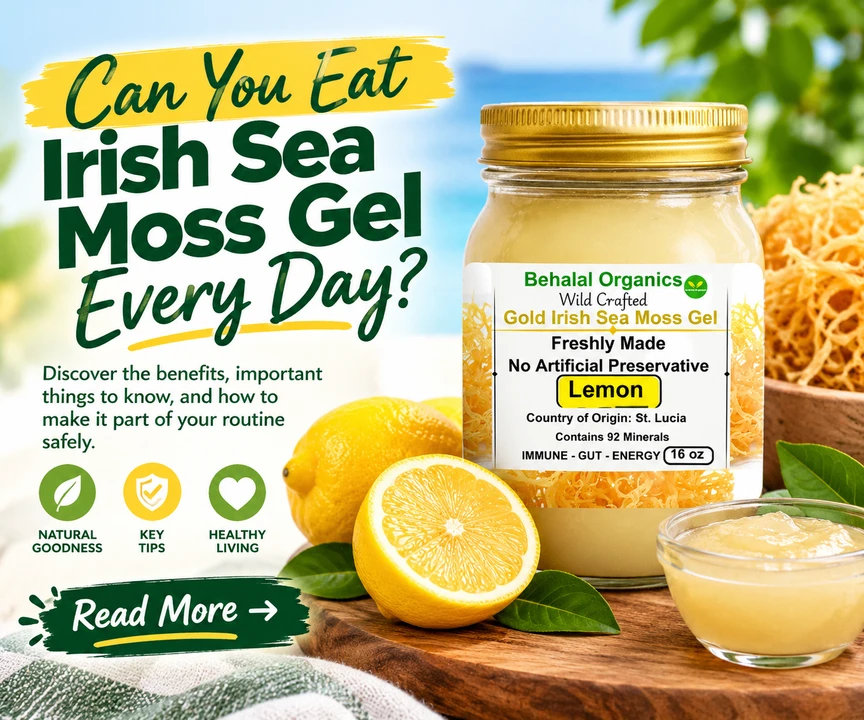
Sea moss has gone from being a relatively unfamiliar sea vegetable to becoming a popular ingredient in smoothies, wellness drinks, breakfast bowls and everyday recipes. If you have recently discovered sea moss gel, you may have one very practical question: can you eat Lemon Irish Sea Moss Gel every day? The short answer is that sea moss can be included in a regular diet, but daily consumption deserves a little more thought than simply assuming that more is better. Irish sea moss naturally contains iodine and other minerals, and its nutritional composition can vary depending on where and how the seaweed was grown and processed. The National Library of Medicine notes that Irish moss, commonly associated with Chondrus crispus, is an edible red seaweed containing minerals including iodine, while also pointing out that seaweed can accumulate contaminants such as arsenic, lead, cadmium and mercury from its growing environment.
That is why the conversation around daily sea moss use should be balanced. You do not need to treat sea moss as a miracle food to enjoy it, and you do not need to avoid it simply because social media sometimes exaggerates what it can do. Instead, think of Lemon Irish Sea Moss Gel as one ingredient in your overall eating pattern. Behalal Organics currently lists its Lemon Irish Sea Moss Gel – St. Lucia Gold as a wildcrafted sea moss gel infused with organic lemon, offering it in different size options. The real question is therefore not simply whether you can eat it every day, but whether regular use makes sense for your individual diet, serving size, iodine intake and health circumstances.
What Is Lemon Irish Sea Moss Gel?
Lemon Irish Sea Moss Gel is essentially sea moss that has been prepared into a smooth, gel-like food and combined with lemon for flavor. Irish moss is a type of red seaweed traditionally used as food, and when it is prepared properly, it develops the thick texture that makes sea moss gel so easy to blend into drinks and recipes. You may see people adding it to smoothies, juices, oatmeal, yogurt, chia pudding or other foods because the gel can disappear into a recipe without dramatically changing its texture. The lemon component gives the product a bright, citrusy taste that can make sea moss more appealing to someone who does not particularly enjoy the natural marine flavor of plain sea moss.
The appeal is easy to understand. Instead of preparing raw or dried sea moss yourself every time you want to use it, a ready-made gel gives you a convenient ingredient that can be stored and incorporated into meals. Behalal Organics describes its Lemon Irish Sea Moss Gel as made from 100% wildcrafted St. Lucia Gold sea moss and infused with fresh organic lemon. That makes it particularly relevant for people who want the convenience of a prepared gel rather than going through the soaking and blending process themselves. Still, convenience does not change the basic nutritional consideration: sea moss is seaweed, and seaweed can contain significant amounts of iodine. So while the gel may be easy to take, it is still sensible to pay attention to how much you consume.
Understanding Irish Sea Moss
Irish sea moss is generally associated with the red seaweed Chondrus crispus, although the term "sea moss" is also used commercially for other types of edible seaweed. It has a long history as a food ingredient and is particularly valued for the way it naturally develops a thick texture when prepared. Its naturally occurring polysaccharides are part of what gives the gel its characteristic consistency. Sea moss also provides minerals, including iodine, although the exact nutrient composition can differ from one product or growing location to another. This variability is one reason it is difficult to say that every spoonful of every sea moss gel contains exactly the same nutritional profile.
It is also important to separate traditional food use from modern health marketing. Sea moss is sometimes promoted online as something that can "detox" the body, burn fat, dramatically boost immunity, cure thyroid problems or solve numerous unrelated health issues. Current evidence does not justify treating those claims as established medical facts. The National Library of Medicine's LactMed review states that sea moss is used as food and medicine but that no medicinal value has been proven. That does not mean sea moss has no nutritional value; it simply means there is a meaningful difference between saying a food contains useful nutrients and saying that the food has been clinically proven to treat a medical condition.
Why Add Lemon to Sea Moss Gel?
Lemon is a natural pairing for sea moss because it adds a refreshing, tangy flavor that can make the gel easier to enjoy. Plain sea moss has a mild ocean-like taste that some people love and others find difficult to tolerate. A lemon-infused version can therefore make the experience much more pleasant, particularly when you are adding the gel to water, smoothies or fruit-based drinks. Lemon also works well with ingredients such as ginger, pineapple, berries, cucumber and coconut water, so there is plenty of room to use the gel creatively instead of simply eating it from a spoon.
There is also a practical reason why flavor matters. The best food routine is not necessarily the one with the longest list of supposed health benefits; it is the one you can realistically maintain. If you enjoy the taste of a food, you are more likely to incorporate it consistently and sensibly. Behalal Organics' Lemon Irish Sea Moss Gel combines sea moss with organic lemon, making it a ready-to-use option for people who prefer a citrus flavor. The lemon should be viewed primarily as a flavor and food pairing rather than evidence that lemon and sea moss together create a special medical effect.
What Is in Irish Sea Moss Gel?
One of the biggest reasons sea moss has attracted attention is its mineral content. Seaweed can provide iodine and other minerals, and Irish sea moss also contains naturally occurring carbohydrates and polysaccharides. However, the exact nutritional profile depends on the seaweed itself, its growing environment, harvesting conditions, preparation method and the final formulation of the gel. That means you should be cautious with broad statements such as "sea moss contains exactly 92 minerals" or other impressive numbers that circulate online. A product's actual composition is more complicated than a viral infographic makes it seem.
The most important nutrient to keep in mind when consuming sea moss regularly is iodine. The body needs iodine to produce thyroid hormones, and the recommended daily amount for adults is 150 micrograms according to the National Institutes of Health Office of Dietary Supplements. The recommended amount rises to 220 micrograms during pregnancy and 290 micrograms during breastfeeding. At the same time, excessive iodine can cause problems in susceptible individuals, which is why consuming an iodine-rich food every day requires more awareness than simply assuming that it is harmless because it is natural.
Iodine and Other Minerals
Iodine is not something your body needs in unlimited quantities. It is essential, but that does not mean consuming as much as possible is beneficial. The NIH explains that excessive iodine intake can contribute to thyroid problems, including hypothyroidism or hyperthyroidism in certain circumstances, and establishes an adult upper intake level of 1,100 micrograms per day from food and supplements. This is particularly relevant to seaweed because iodine levels can vary substantially, and standard nutrition labels do not always list naturally occurring iodine in seaweed products.
This is where moderation becomes more useful than hype. If your diet already contains several iodine sources, adding a concentrated seaweed product every day may increase your total intake more than you realize. Someone who eats seaweed occasionally as a food is in a different situation from someone consuming a concentrated seaweed gel daily alongside iodine-containing supplements. The answer to "Can I eat it every day?" therefore depends partly on what else is on your plate and in your supplement cabinet.
Fiber and Naturally Occurring Polysaccharides
Sea moss also contains naturally occurring polysaccharides and some fiber. These compounds contribute to the characteristic texture of sea moss gel and are one reason the ingredient has attracted interest in nutrition and food research. Fiber is an important part of a balanced diet because it supports normal digestive function, but it is important not to exaggerate how much fiber you are receiving from a small serving of sea moss gel. Beans, lentils, vegetables, fruits, oats and whole grains remain valuable sources of dietary fiber and should not be pushed aside simply because sea moss has become popular.
Research into seaweed-derived polysaccharides is still developing, and laboratory findings should not automatically be presented as proven effects in humans. This distinction matters because a compound can demonstrate interesting activity in a laboratory setting without producing the same result when a person eats a spoonful of a food. Sea moss can still be an interesting addition to a varied diet without needing extraordinary promises attached to it. That is arguably a healthier way to approach any trending food: appreciate what it offers while allowing science to determine what has actually been established.
Is It Safe to Eat Sea Moss Gel Every Day?
For many healthy adults, eating a moderate amount of a properly sourced sea moss food may fit within a varied diet. However, daily use is not automatically appropriate for everyone, and there is no universally established medical dosage of sea moss gel that applies to every person or every product. The concentration of sea moss, the serving size, iodine content and sourcing all matter. A homemade gel made from one type of seaweed may have a different composition from a commercially prepared gel made from another source.
This is why following the manufacturer's serving guidance is more sensible than deciding that several tablespoons must be better than one. The fact that something is natural does not mean unlimited consumption is automatically safe. Seaweed can accumulate minerals and environmental contaminants, and the National Library of Medicine specifically notes the possibility of heavy metals in sea moss depending on the water where it was grown. A reputable product and sensible portion control therefore matter just as much as the ingredient itself.
Why Portion Size Matters
Imagine filling a glass with water. A little water is useful, while an excessive amount consumed very quickly can become harmful. Nutrients can work similarly: the body requires certain nutrients within particular ranges, and more is not automatically better. Sea moss is a good example because it contains iodine, a nutrient that is essential for thyroid hormone production but can also cause problems when consumed excessively.
There is no reason to turn sea moss gel into a competition. If you enjoy Lemon Irish Sea Moss Gel, start with the manufacturer's recommended serving instead of increasing the amount because you have not noticed an immediate effect. Behalal Organics provides its Lemon Irish Sea Moss Gel as a prepared product, so the product's own label and serving guidance should be your starting point rather than a generic internet recommendation. If you are considering long-term daily use, especially alongside other supplements, it is sensible to discuss your overall intake with a healthcare professional.
The Importance of Iodine
Iodine deserves special attention because it is both necessary and potentially problematic in excess. The thyroid gland uses iodine to make hormones that help regulate metabolism and other important functions. Adults generally need around 150 micrograms of iodine daily, while pregnancy and breastfeeding increase the recommended amount. The challenge with seaweed is that the amount of iodine can be highly variable, meaning you cannot safely assume that every spoonful contains the same amount.
People with thyroid disorders or those taking medications that interact with iodine should be especially cautious about making sea moss a daily habit without professional guidance. The NIH notes that some people, including individuals with autoimmune thyroid disease or iodine deficiency, may experience adverse effects at iodine intakes that are considered safe for the general population. This is a good example of why nutrition advice should not be one-size-fits-all.
Potential Benefits of Eating Lemon Irish Sea Moss Gel
The potential value of Lemon Irish Sea Moss Gel is best considered from a food and nutrition perspective, rather than as a treatment. Sea moss can contribute iodine and other minerals, while its gel form makes it easy to incorporate into everyday foods. The lemon flavor can also make it easier to enjoy regularly. These are practical reasons someone might choose it, even without believing every wellness claim associated with sea moss online.
It can also add variety to your diet. Eating well does not have to mean eating the exact same foods every day, and sea vegetables can introduce a different category of plant-based food into your routine. The key is keeping sea moss in proportion. It should complement vegetables, fruits, legumes, grains, protein sources and healthy fats rather than replacing them.
A Convenient Source of Sea Vegetable Nutrients
One practical benefit of sea moss gel is convenience. Instead of buying dried sea moss and preparing it from scratch, you can use a ready-made gel in the foods you already enjoy. Behalal Organics currently describes its Lemon Irish Sea Moss Gel as a wildcrafted St. Lucia Gold sea moss product infused with organic lemon. For someone who wants to experiment with sea moss without turning the preparation process into another household task, that convenience can be valuable.
The nutritional contribution should still be viewed realistically. Sea moss is not a substitute for a multivitamin, a balanced meal or a varied diet. If your breakfast consists of fruit, oats, nuts and yogurt, adding a modest amount of sea moss gel can be one small component of that meal. If your diet is otherwise lacking in vegetables, protein or whole grains, sea moss will not magically fill those gaps. Good nutrition is more like building a house than finding one perfect brick.
May Complement a Balanced Diet
A balanced diet leaves room for interesting foods. You can enjoy Lemon Irish Sea Moss Gel without turning it into the centerpiece of your entire wellness routine. It may work well in a smoothie, alongside breakfast, or mixed into a recipe where its texture is useful. The goal is simply to include it sensibly rather than expecting it to do the work of an entire diet.
This approach also helps keep expectations realistic. Sea moss has not been proven to cure disease, and current evidence does not establish it as a guaranteed solution for weight loss, detoxification, thyroid disorders or other medical conditions. The current NLM review specifically states that medicinal value has not been proven. Enjoying the product as a nutrient-containing food is a much more defensible position than making promises that the available evidence cannot support.
Can You Eat Lemon Irish Sea Moss Gel on an Empty Stomach?
There is no general rule saying that sea moss gel must be eaten with food. Some people may prefer taking it before breakfast because it fits naturally into their routine, while others may find that eating it alongside food is more comfortable. Personal tolerance can vary, particularly when someone is introducing a new food or consuming a larger amount than they are accustomed to.
If you are new to sea moss gel, there is little reason to rush. Start with the recommended serving and pay attention to how your body responds. You can mix it into a smoothie or breakfast rather than taking it by itself if the texture or taste is not appealing. The goal is not to prove that you can consume sea moss on an empty stomach; the goal is to find a practical way to include it in your diet if you enjoy it.
How Much Lemon Irish Sea Moss Gel Should You Take?
There is no single universal daily dose of sea moss gel supported by high-quality clinical evidence. Different products can have different concentrations, preparation methods and serving recommendations, so it is important not to assume that a tablespoon of one product is nutritionally identical to a tablespoon of another. The safest starting point is the serving instruction provided by the manufacturer.
For Behalal Organics' Lemon Irish Sea Moss Gel, check the current product label for its recommended serving and storage instructions rather than relying on a generic amount copied from another sea moss website. If you are thinking about taking sea moss every day for months, consider the rest of your iodine intake as well. This is especially important if you take multivitamins, kelp supplements or other iodine-containing products, because your total intake matters more than any one food viewed in isolation.
Who Should Be Careful With Daily Sea Moss Gel?
Daily sea moss consumption deserves extra caution for people with existing thyroid conditions, people taking certain medications, pregnant or breastfeeding individuals, and anyone who has been advised to follow a low-iodine diet. The NIH explains that excessive iodine can affect thyroid function and that some people are more sensitive to high iodine intake than others. This does not mean everyone in these groups must automatically avoid sea moss, but it does mean that personalized professional guidance is more appropriate than generic internet advice.
Breastfeeding deserves particular attention. The NLM's LactMed review reports that excessive iodine from seaweed consumed by mothers has been associated with thyroid suppression in breastfed infants and recommends avoiding sea moss during breastfeeding unless iodine and heavy-metal levels have been demonstrated to be low enough to be safe. Anyone in this category should therefore speak with a qualified healthcare professional before making sea moss a regular part of their diet.
How to Add Lemon Irish Sea Moss Gel to Your Daily Routine
If you decide that sea moss fits your diet, keep it simple. One of the easiest approaches is to blend the recommended amount into a fruit smoothie. Lemon sea moss can work particularly well with pineapple, mango, berries, banana, ginger, cucumber or coconut water. You can also experiment with oatmeal, chia pudding or yogurt if you enjoy the texture.
Another approach is to make a refreshing drink. Mix a suitable serving into water and add ingredients you already enjoy, such as lemon, cucumber, mint or ginger. You do not need to create an elaborate "detox" recipe for it to be enjoyable. The simpler the routine, the easier it is to maintain without turning one ingredient into an obsession.
How to Choose a Quality Sea Moss Gel
Quality is one of the most important considerations when purchasing sea moss. Seaweed grows directly in the marine environment, which means the conditions of the water can influence what accumulates in the plant. The NLM specifically identifies arsenic, lead, cadmium and mercury among contaminants that may be present in sea moss depending on where it was grown. Responsible sourcing and appropriate testing are therefore meaningful considerations rather than marketing extras.
When comparing products, look for clear ingredient information, identifiable sourcing, appropriate storage instructions and transparent product information. If a manufacturer provides independent laboratory testing or contaminant testing, that can add useful reassurance. It is also helpful to examine the ingredient list rather than focusing only on phrases such as "superfood," "detox" or "miracle." A straightforward product description tells you much more about what you are actually buying.
Lemon Irish Sea Moss Gel From Behalal Organics
Behalal Organics currently offers Lemon Irish Sea Moss Gel – St. Lucia Gold, described on its website as a premium wildcrafted sea moss gel infused with organic lemon. The product is listed in multiple size options, with the current website showing an MSRP range of $29.95 to $49.95. For shoppers specifically looking for a lemon-flavored sea moss gel rather than plain sea moss gel, the product provides a convenient ready-to-use option.
As with any sea moss product, the sensible approach is to follow the product's serving and storage instructions and consider your overall dietary iodine intake. The product can be used as an ingredient in smoothies, drinks and other foods, making it easy to incorporate into a normal eating routine. Rather than promising that taking it every day will produce a particular medical outcome, it is more accurate to position Lemon Irish Sea Moss Gel as a convenient sea vegetable food that can be enjoyed as part of a varied diet.
Conclusion
So, can you eat Lemon Irish Sea Moss Gel every day? For many healthy adults, sea moss can be incorporated into a regular diet, but daily consumption should be approached with moderation and awareness rather than treated as an unlimited wellness habit. The biggest consideration is iodine: the body needs it, but excessive intake can interfere with thyroid function, and seaweed can contain variable amounts of iodine. Product quality matters too, because sea moss can accumulate environmental contaminants depending on where it is grown.
Behalal Organics' Lemon Irish Sea Moss Gel offers a convenient way to enjoy wildcrafted St. Lucia Gold sea moss with organic lemon, particularly if you prefer a ready-made gel and a refreshing citrus flavor. The best way to use it is to follow the product's recommended serving, include it as part of a varied diet and avoid treating it as a replacement for nutritious foods or medical care. If you have a thyroid condition, are pregnant or breastfeeding, take relevant medications, or have been instructed to limit iodine, speak with a healthcare professional before making sea moss a daily habit.
Sea moss does not need exaggerated promises to be interesting. Sometimes, a good food is simply a good food: something versatile, convenient and enjoyable that can have a place in a balanced lifestyle when consumed thoughtfully.
Frequently Asked Questions
1. Can I eat Lemon Irish Sea Moss Gel every day?
Some healthy adults may be able to include moderate amounts of sea moss gel regularly, but there is no universal daily dose that applies to every product or person. Because sea moss can contain iodine in varying amounts, follow the product's serving guidance and consider your total iodine intake.
2. What are the benefits of Lemon Irish Sea Moss Gel?
Lemon Irish Sea Moss Gel can provide iodine and other minerals while offering naturally occurring polysaccharides and a convenient way to add sea vegetables to foods and drinks. However, many broader health claims associated with sea moss have not been established through strong human clinical research.
3. Is Lemon Irish Sea Moss Gel good for the thyroid?
Sea moss contains iodine, which the body needs to produce thyroid hormones. However, consuming excessive iodine can also affect thyroid function. People with thyroid conditions should therefore consult a healthcare professional before regularly consuming sea moss.
4. Can I take sea moss gel on an empty stomach?
There is no general requirement that sea moss gel must be taken with food. Some people may prefer taking it with breakfast or blending it into a smoothie, particularly if they find the texture or taste more comfortable that way.
5. Where can I buy Lemon Irish Sea Moss Gel?
Behalal Organics currently lists Lemon Irish Sea Moss Gel – St. Lucia Gold on its website as a wildcrafted sea moss gel infused with organic lemon.
Legal Disclaimer: This statement has not been evaluated by the FDA. This product is not intended to diagnose, treat, cure, or prevent any disease or health condition.
Explore Popular Articles
-

What to Know About Herbal Digestive Support with Turmeric and Botanicals
21st Oct 2026Article Outline - H1: What to Know About Herbal Digestive Support with Turmeric and Botanicals H
-
What Are Kola Nut Bitters With Garlic, Ginger, and Moringa?
20th Oct 2026Article Outline - H1: What Are Kola Nut Bitters With Garlic, Ginger, and Moringa? H2: Understand
-
What Is Mondia Whitei Powder? Uses, Traditional Benefits, and Preparation
15th Oct 2026Mondia Whitei powder is a plant-based product made from the dried and ground parts of Mondi